
Endometriosis and Conception: Evidence-Based Management Strategies
Endometriosis is one of the most common reasons women struggle to conceive, yet it remains one of the most misunderstood conditions in reproductive medicine. Tissue similar to the uterine lining grows outside the uterus, triggering inflammation, scarring, and a biochemical environment that interferes with egg quality, fertilization, and implantation. The diagnosis often arrives years late, after the damage is already layered deep into a patient’s reproductive tissue.
The good news is that targeted treatment, particularly when matched carefully to disease stage and a woman’s fertility goals, can meaningfully improve outcomes. As an integrative physician, I work with patients to understand not just which procedures make sense surgically, but how nutrition, stress physiology, and environmental exposures interact with endometriosis biology. The two conversations are inseparable.
If you’re navigating endometriosis and trying to conceive, the information on victoriamaizesmd.com reflects an approach to reproductive health that draws on both evidence-based medicine and the broader context of your body’s terrain. This post is meant to give you a clear, honest map of what we know and what the research actually supports.
What Is Endometriosis and Why Does It Affect Fertility?
Endometriosis is a chronic inflammatory condition in which endometrial-like tissue implants outside the uterine cavity, most commonly on the ovaries, fallopian tubes, pelvic peritoneum, and bowel. According to the Mayo Clinic, endometriosis affects an estimated 1 in 10 women of reproductive age, and up to half of women experiencing infertility have the condition. The numbers are staggering given how long it typically takes to get a confirmed diagnosis, an average of seven to ten years from symptom onset.
The fertility impact is multifactorial. Inflammation alters the follicular microenvironment, changes peritoneal fluid chemistry, impairs sperm motility, and can disrupt implantation through changes to endometrial receptivity. Ovarian endometriomas (the cystic “chocolate cysts” formed on the ovaries) reduce ovarian reserve directly by destroying healthy ovarian cortex. Adhesions from repeated inflammatory cycles can distort pelvic anatomy, blocking egg pickup by the fallopian tube. None of these mechanisms work in isolation. That’s what makes endometriosis-related infertility so complex to treat.
Endometriosis and Infertility: What Does the Pathophysiology Tell Us About Treatment?
Endometriosis causes infertility through three overlapping mechanisms: anatomical distortion from adhesions and endometriomas, an inflammatory peritoneal environment that impairs gamete function, and altered endometrial receptivity that prevents successful implantation. Treatment must address whichever mechanism dominates in a given patient, which is why staging and individualized assessment matter more than any single protocol.
The American Society for Reproductive Medicine (ASRM) stages endometriosis from I to IV based on lesion extent and adhesion severity. But here’s what patients rarely hear: stage doesn’t predict fertility outcomes as cleanly as clinicians once assumed. Women with Stage I or II disease can have profound infertility due to biochemical disruption, while some women with Stage IV disease conceive naturally. This is why the research published in peer-reviewed reproductive medicine journals consistently argues for personalized assessment rather than rigid stage-based treatment ladders.
“Endometriosis is associated with a 2-fold increased risk of infertility compared to the general population, and the mechanisms extend well beyond anatomical distortion to include immune dysregulation and impaired embryo implantation.”
What Does the Laparoscopy Procedure for Endometriosis Actually Involve?
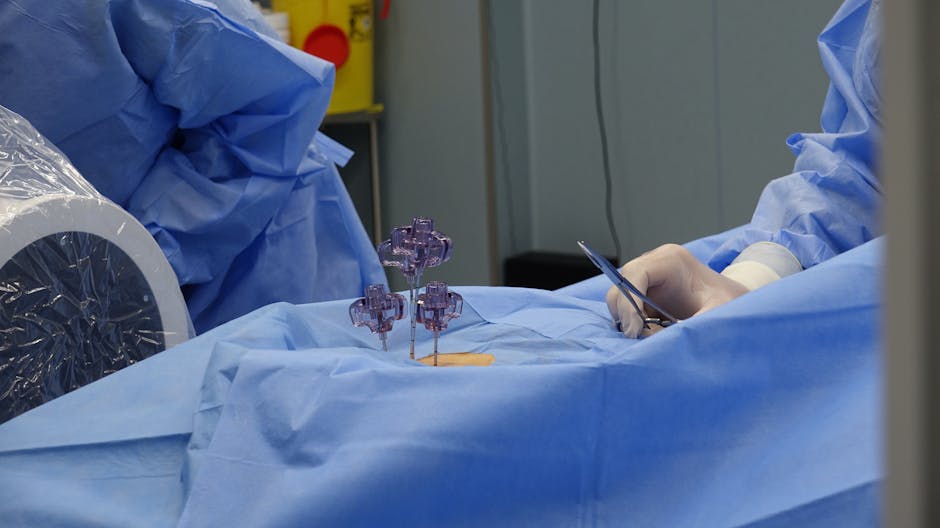
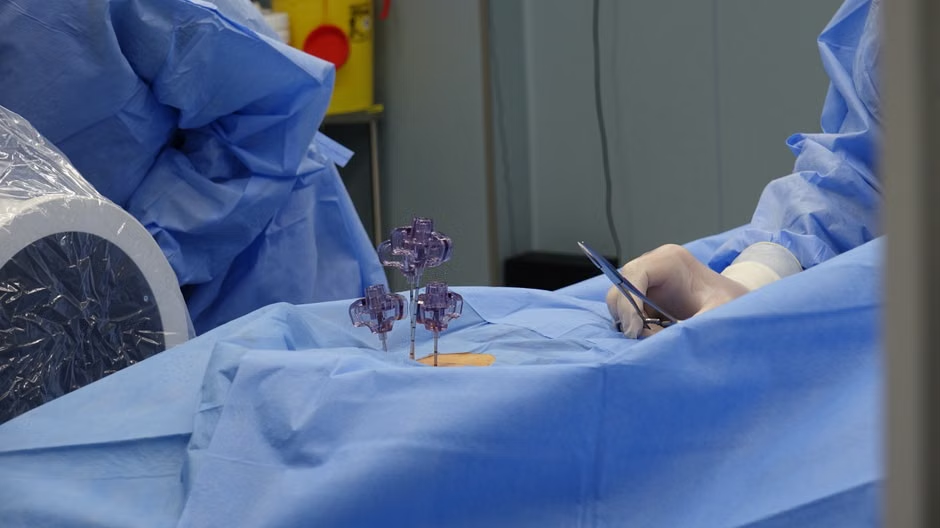
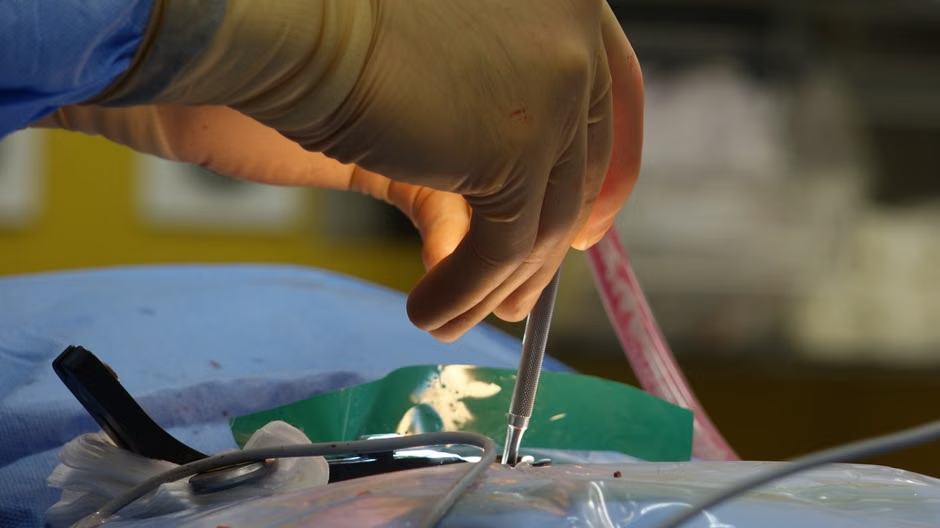
Laparoscopic surgery for endometriosis is the gold standard for both diagnosis and treatment. A surgeon inserts a thin camera through a small incision near the navel, then uses additional small ports to introduce instruments that excise or ablate endometrial implants, drain and remove endometriomas, and lyse adhesions. The laparoscopy procedure for endometriosis is typically outpatient, performed under general anesthesia, with most patients returning to normal activity within one to two weeks.
There are two primary surgical techniques for ovarian endometriomas: drainage and ablation versus cystectomy (stripping the cyst wall). The evidence favors cystectomy for improving spontaneous pregnancy rates and reducing recurrence, though cystectomy carries a small but real risk of reducing ovarian reserve by inadvertently removing healthy ovarian cortex alongside the cyst wall. This is a genuine tradeoff, and it deserves an honest conversation with your surgeon before you consent. An experienced endometriosis specialist, not just a general gynecologist, should be performing this procedure.
For Stage I and II disease, laparoscopic surgery has been shown to improve spontaneous conception rates compared to diagnostic laparoscopy alone. For Stage III and IV disease, the evidence is more nuanced, and surgery may be recommended primarily to reduce pain, improve access to the ovaries for egg retrieval, or enhance IVF outcomes rather than to achieve spontaneous conception.
What Are the Main Endometriosis Fertility Treatments?
Treatment choices depend on disease stage, a patient’s age, ovarian reserve, partner fertility status, and whether she prefers to attempt spontaneous conception or move directly toward assisted reproduction. There’s no one pathway that fits everyone, and that’s not a failure of medicine. It’s an accurate reflection of how variable endometriosis is as a disease. On the integrative medicine practice side, I also factor in anti-inflammatory nutrition, stress load, and environmental exposures when building a fertility plan, because these variables genuinely influence inflammatory burden and ovarian function.
- Laparoscopic excision surgery for confirmed disease, particularly endometriomas greater than 3-4 cm or moderate-to-severe adhesions
- Intrauterine insemination (IUI) with controlled ovarian stimulation for mild disease in women with open tubes and adequate ovarian reserve
- In vitro fertilization (IVF) for advanced disease, low ovarian reserve, or when prior surgical or IUI cycles have failed
- Hormonal suppression therapy (GnRH agonists, progestins, combined oral contraceptives) as a bridge to reduce disease activity before surgery or IVF, though these suppress ovulation and are not used while actively trying to conceive
- Expectant management for young women with minimal disease and no anatomical disruption, especially if trying naturally for less than six months
- Anti-inflammatory and nutritional support to reduce systemic inflammatory burden and support oocyte quality
When Is Surgery Not the Right First Step for Endometriosis Infertility?
Surgery is not automatically the best answer, and I want to be direct about that. For women with diminished ovarian reserve, particularly those with bilateral endometriomas and low AMH or antral follicle counts, repeat surgical excision can cause more harm than good. Each surgery risks further depletion of the ovarian cortex. In these cases, a reproductive endocrinologist may recommend proceeding directly to IVF to preserve whatever ovarian reserve remains, rather than operating again.
Age matters here too. A 38-year-old with Stage II endometriosis and declining reserve has a different calculus than a 29-year-old with the same stage. The ESHRE (European Society of Human Reproduction and Embryology) guidelines for endometriosis recommend that clinicians consider a woman’s age and ovarian reserve before recommending any surgical intervention aimed at improving fertility, precisely because the window for recovery and treatment response narrows with time.
“For women with endometrioma and diminished ovarian reserve, the risks of repeat surgery often outweigh the potential benefit, and direct IVF may be the most effective path to conception.”
What Can You Realistically Expect After Treatment?
Expectations matter. Unrealistic ones cause as much harm as delayed diagnoses. Here’s what the evidence actually supports for reproductive outcomes after endometriosis treatment:
- After laparoscopic surgery for Stage I/II disease, spontaneous conception rates are approximately 30-40% within 12 months in women under 35 with no other fertility factors
- After cystectomy for endometriomas, ovarian reserve may temporarily decline for 3-6 months before stabilizing
- IVF live birth rates for women with endometriosis are slightly lower per cycle than for tubal factor infertility but remain a viable and effective option, especially for Stage III/IV
- Hormonal suppression therapy alone does not improve fertility; it suppresses ovulation and must be cycled off before conception attempts
- Recurrence rates after surgery are approximately 20-30% within five years, which is why fertility goals should be pursued promptly after surgical treatment rather than delayed
The integrative approach I use with patients also focuses on the three to six months before any treatment intervention. Oocyte quality reflects what the body experienced during the 90 days of follicle maturation leading up to ovulation. Reducing oxidative stress through targeted nutrition, omega-3 supplementation, antioxidants, and stress physiology work during that window is evidence-informed preparation, not wishful thinking. For more on how Victoria Maizes, MD approaches fertility from a whole-body lens, the foundation of that work is explained at victoriamaizesmd.com and in the clinical frameworks she developed over decades of integrative practice.
Practical Tips if You’re Managing Endometriosis and Trying to Conceive
- Get an AMH and antral follicle count before any surgical consultation. Ovarian reserve data should shape every conversation about whether and when to operate.
- Seek a surgeon who specializes in endometriosis excision, not just ablation. Excision removes the disease at its root; ablation burns the surface and has higher recurrence.
- Don’t wait indefinitely after a diagnosis. Endometriosis is progressive in most women. A six-month window of trying naturally is reasonable; beyond that, a reproductive endocrinologist consult is warranted.
- Address systemic inflammation nutritionally. A Mediterranean-style diet rich in omega-3s, leafy greens, and low in processed foods reduces prostaglandin-driven inflammation that worsens endometriosis symptoms and peritoneal environment quality.
- Discuss hormonal therapy timing carefully if IVF is the plan. Some protocols use GnRH agonist pre-treatment before IVF retrieval in endometriosis patients to down-regulate the inflammatory environment, though the evidence is mixed and individualized.
- Track your mental load. Cortisol dysregulation from chronic stress alters immune function and can worsen endometriosis progression. Mindfulness-based stress reduction (MBSR) has measurable effects on inflammatory markers and is something I recommend as an adjunct, not a replacement for medical care.
Endometriosis is a formidable condition, but it’s not an automatic barrier to motherhood. The path forward requires honest assessment of your specific disease burden, your ovarian reserve, your age, and your priorities. It requires a team that communicates well across surgical, reproductive, and integrative medicine disciplines. And it requires a patient who is informed enough to ask the right questions and advocate for herself. If you’re building that team and looking for a framework that treats the whole person, not just the pathology, the approach outlined throughout this practice starts with exactly that premise.