
Acupuncture for Fertility: Clinical Evidence and Treatment Protocols
Facing challenges on the path to parenthood can be one of life’s most profound stressors. Many individuals and couples seek supportive therapies to enhance their reproductive health, often wondering if there are complementary approaches that can truly make a difference. As an integrative physician, I frequently see patients looking beyond conventional routes, searching for ways to optimize their well-being and prepare their bodies for conception.
Acupuncture, a cornerstone of traditional Chinese medicine, has garnered significant interest in the fertility space. It’s not a magic bullet, but it offers a profound way to balance the body’s systems, reduce stress, and potentially improve outcomes for those trying to conceive. We’re looking at a modality that brings the body into a more harmonious state, an essential component of overall health and, by extension, fertility.
At Victoria Maizes, MD, we believe in synthesizing advances in medical science with the wisdom of healing traditions. Acupuncture fits seamlessly into this philosophy, offering a time-tested method to support reproductive health. My opinion is that preparing your body, mind, and spirit for easy conception and a healthy pregnancy is well worth it, and integrating therapies like acupuncture can be a powerful part of that journey towards an integrative approach to women’s health.
What is Acupuncture for Fertility and How Does It Work?
Acupuncture for fertility involves the insertion of fine needles into specific points on the body to stimulate energy flow and promote balance, aiming to improve reproductive function. The traditional theory suggests it balances Qi (life force) and blood flow, while modern understanding points to neurological, endocrine, and immune system modulation. This ancient practice works to regulate menstrual cycles, reduce stress, and enhance uterine blood flow, creating a more hospitable environment for conception.
In our practice, we’ve observed how acupuncture seems to influence the body’s natural processes. From a Western medical perspective, it’s thought that acupuncture stimulates the nervous system, which then signals the brain to release neurohormones. These biochemical changes can influence the hypothalamus-pituitary-ovarian (HPO) axis, which is crucial for fertility. This cascade of events can lead to improved blood flow to the reproductive organs, modulated hormonal responses, and reduced stress, all factors that contribute to a woman’s ability to conceive and carry a pregnancy.
“Acupuncture may affect fertility by regulating the menstrual cycle and ovulation, increasing uterine blood flow, improving ovarian function, regulating hormone levels, improving sperm quality, and reducing stress.”
Acupuncture for Fertility: Where Do Needles Go?
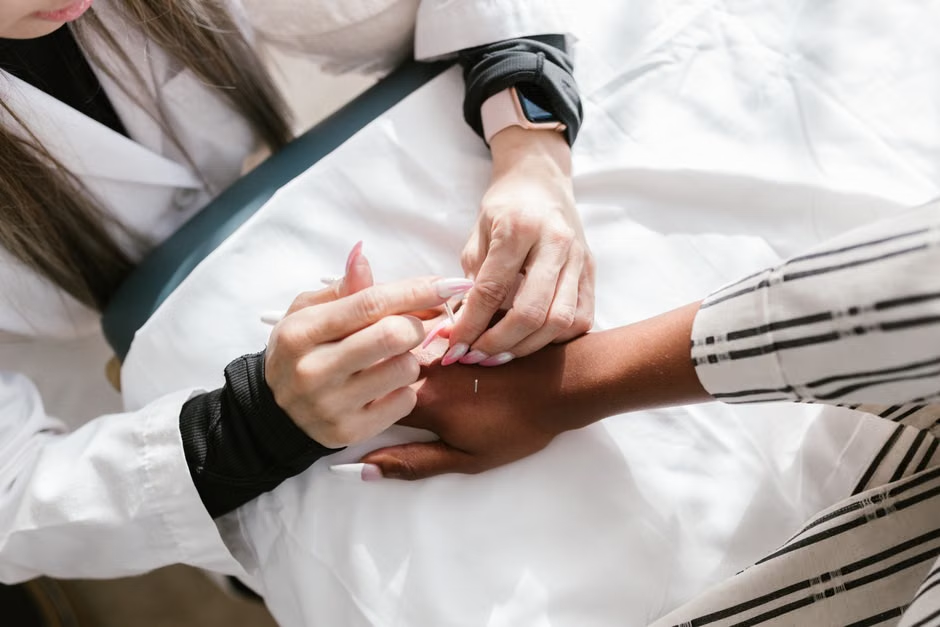
When receiving acupuncture for fertility, needles are strategically placed on specific points, primarily on the abdomen, lower back, legs, and ears, though points on the hands and feet may also be used. These points correspond to meridians, or energy pathways, believed to influence reproductive organs and hormonal balance. The exact points chosen depend on the individual’s diagnosis, based on traditional Chinese medicine principles and their specific fertility challenges.
For example, points on the lower abdomen might target the uterus and ovaries directly to improve blood flow, while points on the lower legs, like Spleen 6 or Liver 3, are often used to nourish blood, regulate the menstrual cycle, and calm the spirit. Ear points, part of auricular acupuncture, can stimulate the endocrine system and reduce stress, which is a significant factor in fertility. As an integrative physician, I understand the importance of personalized care, and a skilled acupuncturist will always tailor the treatment to your unique needs and cycle phase.
What Fertility Challenges Can Acupuncture Support?
Acupuncture can be a valuable complementary therapy for various fertility challenges, supporting both natural conception and assisted reproductive technologies (ART) like IVF. It’s often used to help:
- Regulate menstrual cycles: For women with irregular periods, acupuncture may help normalize ovulation.
- Improve ovarian function: Potentially enhancing egg quality and follicular development.
- Increase uterine blood flow: Creating a healthier uterine lining for embryo implantation.
- Reduce stress and anxiety: A common barrier to conception, stress hormones can disrupt reproductive function.
- Manage PCOS symptoms: Such as insulin resistance and hormonal imbalances that affect ovulation.
- Support male fertility: By potentially improving sperm count, motility, and morphology.
- Complement IVF/IUI: Studies suggest it can be used alongside ART to improve success rates by reducing stress and improving uterine receptivity.
While acupuncture isn’t a standalone cure for all fertility issues, its ability to address underlying systemic imbalances makes it a powerful adjunct. This is important because everything you experience in your mind affects your body, and vice versa. Integrative medicine addresses these challenges by synthesizing advances in medical science and the wisdom of healing traditions.
Acupuncture for Fertility Evidence
The evidence supporting acupuncture for fertility is growing, with research indicating its potential benefits, particularly in conjunction with IVF. Studies suggest acupuncture can improve pregnancy rates, reduce stress, and regulate hormonal imbalances. While some findings are mixed due to study design variations, the cumulative data suggests a positive role, especially in improving uterine blood flow and supporting the implantation process.
My clinical experience and the body of research suggest that acupuncture offers tangible support. For instance, a meta-analysis published in the journal Fertility and Sterility indicated that acupuncture administered around the time of embryo transfer in IVF patients could improve clinical pregnancy rates. The scientific community is still working to fully understand all the mechanisms at play, but the consistent theme is its role in supporting the body’s innate healing capacities.
“Acupuncture may improve the probability of pregnancy by several mechanisms, including modulating neuroendocrine factors, improving ovarian and uterine blood flow, and impacting inflammatory and immune mediators.”
How Often Should You Receive Acupuncture for Fertility?
The frequency of acupuncture for fertility typically depends on your individual needs, the specific fertility challenge, and whether you are pursuing natural conception or ART. For optimal results, it’s often recommended to receive acupuncture once or twice a week, particularly during specific phases of your menstrual cycle or leading up to and immediately following an IVF embryo transfer. Consistency is key to achieving cumulative benefits.
For those trying to conceive naturally, a typical course might involve weekly sessions for 3-6 months to regulate the cycle and improve overall health before trying to conceive. If you’re undergoing IVF, a more intensive schedule might be recommended, with sessions often scheduled immediately before and after embryo transfer, in addition to regular weekly treatments during the stimulation phase. A qualified acupuncturist will develop a personalized treatment plan for you. Remember, a holistic approach also includes foundational nutritional strategies, which we discuss in detail in our article on eating for pleasure, vitality, and health.
Is Acupuncture Right for Everyone? Considering Alternatives
While acupuncture offers significant benefits for many, it’s important to recognize that it’s not a one-size-fits-all solution, and its suitability depends on individual circumstances. For example, if there are structural issues like severe fallopian tube blockage or specific genetic factors affecting fertility, acupuncture alone may not be sufficient. It’s best used as part of a broader integrative treatment plan.
As an integrative medicine specialist, I always encourage my patients to consider a range of options. Sometimes, the primary issues might require medical interventions, surgery, or other therapies. We might explore dietary changes, specific nutritional supplements, or mindfulness-based stress reduction (MBSR) programs. MBSR, for instance, has strong evidence for reducing stress, which is often a critical factor in fertility. For some, addressing lifestyle factors like sleep, exercise, and environmental toxin exposure might be the more immediate and impactful step. It’s about finding the right combination of tools that will best support your unique journey.
Practical Tips for Integrating Acupuncture into Your Fertility Journey
If you’re considering acupuncture to support your fertility, here are some practical tips to help you get the most out of your experience:
- Choose a Qualified Practitioner: Look for an acupuncturist with specific experience and training in reproductive medicine and fertility. Ask about their credentials and success rates.
- Communicate Openly: Share your complete medical history, including any conventional fertility treatments you are undergoing. This helps your acupuncturist tailor the treatment effectively.
- Be Consistent: Adhere to the recommended treatment schedule. Acupuncture’s benefits are often cumulative, meaning regular sessions over time yield the best results.
- Combine with Lifestyle Changes: Support your acupuncture treatments with healthy lifestyle choices. This includes a nutrient-dense diet, regular moderate exercise, adequate sleep, and stress management techniques.
- Track Your Cycle: If trying to conceive naturally, track your menstrual cycle, ovulation, and any symptoms. This information is invaluable for your acupuncturist.
- Manage Stress: Acupuncture helps, but also incorporate other stress-reduction practices like meditation, deep breathing, or yoga. Stress can significantly impact hormonal balance.
Embarking on a fertility journey can be complex, but incorporating supportive therapies like acupuncture can empower you by addressing both the physical and emotional aspects of conception. By integrating evidence-based acupuncture with broader lifestyle and medical strategies, you’re not just treating symptoms, but fostering a state of holistic well-being that can enhance your chances of achieving a healthy pregnancy. We’re here to guide you, offering thoughtful, personalized care every step of the way.